How to Clean a Washing Machine That Smells
A washing machine can smell unpleasant even when the drum looks clean.
Detergent residue, fabric softener, lint, hair, moisture, and dirt can collect inside the drum, detergent drawer, door seal, filter, and other areas that stay damp between loads.
The safest way to clean the machine is to follow its maintenance instructions, remove visible residue from accessible parts, and run the washer’s approved cleaning cycle with the correct product.
Do not assume that vinegar, bleach, or a homemade mixture is appropriate for every washing machine. Cleaning instructions vary by model.
Check the Owner’s Manual First
Before adding a cleaning product or removing a filter, find the care instructions for your exact washer.
Check for:
- A Tub Clean or Clean Washer cycle
- The approved washing-machine cleaner
- Whether chlorine bleach is permitted
- Whether vinegar is permitted
- Detergent-drawer removal instructions
- Drain-pump filter access
- Door-seal cleaning guidance
- Recommended cleaning frequency
Some washers have an owner-accessible filter. Others do not.
Do not force open a panel or remove a component unless the manual identifies it as routine owner maintenance.
Empty the Washer
Remove all clothing, towels, and other items from the drum.
A washer-cleaning cycle should normally be run with the machine empty unless the manufacturer specifically says otherwise.
Check the drum for:
- Coins
- Hair clips
- Paper
- Lint
- Small clothing items
- Pet hair
- Detergent pods that did not dissolve
- Other loose debris
Remove visible items before beginning the cleaning cycle.
Wipe the Drum
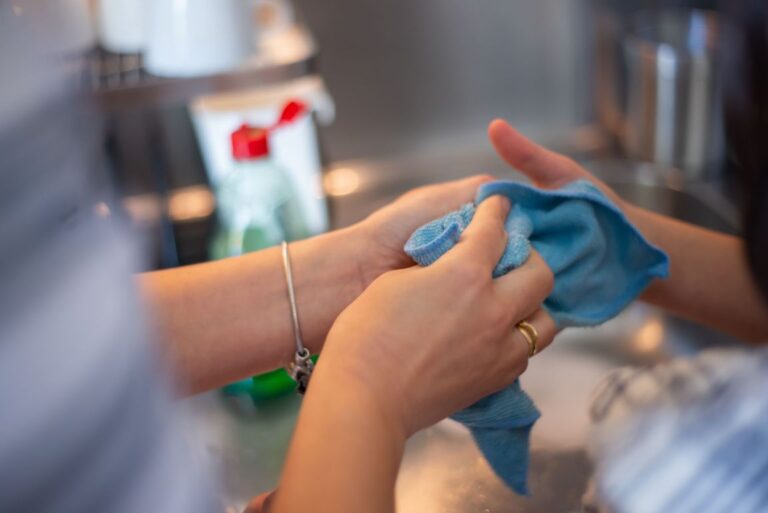
Use a soft, damp microfiber cloth to wipe the accessible drum surface.
Pay attention to:
- The lower part of the drum
- The back wall
- The area around the drum opening
- The inside of the door or lid
- The edge where water and residue may collect
Avoid abrasive pads or rough brushes that could scratch the surface.
If the manual permits a mild cleaner for the drum, apply it to the cloth rather than spraying it heavily into the machine.
Clean the Door Seal on a Front-Load Washer
The flexible rubber seal around a front-load washer can trap water, lint, hair, detergent residue, and small objects.
Gently pull back the accessible folds and inspect them.
You may find:
- Hair
- Lint
- Coins
- Small socks
- Tissue
- Sludge
- Standing water
- Dark residue
Remove loose debris carefully. Wipe the seal with a soft cloth and the cleaning method recommended by the manufacturer.
Do not use a sharp object or aggressively pull the gasket. A torn or displaced seal may cause leaking.
Dry the folds when finished.
If the seal is cracked, damaged, or heavily stained beneath the surface, it may need professional inspection or replacement rather than stronger scrubbing.
Clean the Detergent Drawer
Detergent and fabric-softener residue can build up inside the dispenser.
Remove the drawer only if it is designed to come out.
A typical process is:
- Pull the drawer open.
- Press the release tab when present.
- Remove the drawer gently.
- Rinse removable sections with warm water.
- Use a soft brush for corners and narrow channels.
- Wipe the drawer housing.
- Dry the parts.
- Reinstall the drawer correctly.
Do not use a hard scraper inside plastic dispenser channels.
If the drawer is not removable, wipe the accessible areas with a damp cloth according to the manual.
Check the Drain-Pump Filter
Some front-load washing machines have a small drain-pump filter behind a lower access panel.
This filter may collect:
- Lint
- Hair
- Coins
- Buttons
- Small fabric pieces
- Other debris
Do not open it without reading the instructions first. Water may drain out when the filter is loosened.
When your model has an owner-cleanable filter:
- Turn off the machine.
- Unplug it when instructed.
- Place towels and a shallow tray beneath the access area.
- Drain the emergency hose when the machine includes one.
- Remove the filter slowly.
- Clear visible debris.
- Rinse the filter.
- Inspect the housing carefully.
- Reinstall and tighten the filter correctly.
- Close the access panel.
An incorrectly installed filter can leak.
If the filter is stuck, damaged, or inaccessible, do not force it.
Clean Around the Agitator or Impeller
Top-load washers may use a central agitator or a low-profile impeller.
Lint, detergent residue, and small items can collect around the base or beneath removable parts.
Wipe accessible surfaces with a soft cloth. Remove the agitator only when the manufacturer provides owner instructions for doing so.
Do not pry it loose or dismantle the wash plate without guidance.
Run the Approved Cleaning Cycle
Many modern washing machines include a cycle labeled:
- Tub Clean
- Clean Washer
- Self Clean
- Drum Clean
- Machine Clean
Use the cycle and cleaning product specified in the manual.
A general process may be:
- Make sure the washer is empty.
- Add the approved cleaner in the specified location.
- Select the cleaning cycle.
- Let the complete cycle finish.
- Run an additional rinse if instructed.
- Wipe the drum and seal afterward.
- Allow the interior to dry.
Do not add ordinary laundry detergent unless the cleaning instructions require it.
Do not interrupt the cycle unnecessarily.
Should You Use Washing-Machine Cleaner?
A cleaner made specifically for washing machines is often the simplest option when the manufacturer approves it.
Follow the cleaner’s directions for:
- Quantity
- Placement
- Water temperature
- Cycle choice
- Rinsing
- Frequency
Using more cleaner than directed will not necessarily improve the result. It may leave more residue to rinse away.
Should You Use Vinegar?
Vinegar is not a universal washing-machine cleaner.
Some manufacturers may allow a measured amount in certain machines. Others recommend against it because repeated acidic exposure may affect rubber components or other internal parts.
Use vinegar only when the owner’s manual for your model permits it.
Never mix vinegar with chlorine bleach. The combination can release dangerous chlorine gas.
Should You Use Bleach?
Some washers permit chlorine bleach during a maintenance cycle. Others require a washing-machine cleaner instead.
Check the manual before using it.
When bleach is permitted:
- Measure it accurately.
- Put it only in the specified compartment.
- Keep the area ventilated.
- Avoid splashing it onto clothing or surfaces.
- Complete the required rinse.
- Never mix it with vinegar, ammonia, or another cleaner.
Do not combine several cleaning products in the same cycle.
Wipe the Exterior
Use a soft damp cloth and mild soap when needed.
Clean:
- Control panel
- Buttons and dials
- Door or lid
- Handle
- Top surface
- Front panel
- Detergent spills around the dispenser
Apply moisture to the cloth instead of spraying directly over the controls.
Dry the exterior afterward.
Avoid abrasive powders, rough pads, solvents, and excessive water.
Let the Washer Dry Between Loads
Moisture left inside the washer contributes to stale odors.
After the final load of the day:
- Remove laundry promptly.
- Wipe standing water from the seal.
- Leave the door or lid open when the manufacturer permits it.
- Leave the detergent drawer slightly open when appropriate.
- Hang wet cloths rather than leaving them in the drum.
- Keep the laundry area ventilated.
Do not leave the washer open where a child or pet could climb inside or become trapped.
Use the Correct Amount of Detergent
Too much detergent can leave residue inside the washer and on clothing.
Follow:
- The detergent label
- The washing-machine instructions
- The load size
- Soil level
- Water hardness
- Whether the machine requires high-efficiency detergent
Do not automatically fill the dispenser to its maximum line for every load.
More detergent does not always mean cleaner laundry.
Avoid Overusing Fabric Softener
Liquid fabric softener can contribute to residue in the dispenser, drum, and internal water path when too much is used.
Measure it according to the product and washer instructions.
Clean the softener compartment regularly and do not pour product above its maximum line.
For some laundry loads, fabric softener may not be needed at all.
Check Laundry Before Loading
Small items can collect around the seal, filter, or pump.
Before washing:
- Empty pockets.
- Close zippers.
- Secure small straps.
- Place tiny garments in a mesh laundry bag.
- Shake out heavily soiled items.
- Remove excessive pet hair when practical.
- Do not wash items that are not machine-safe.
This reduces the amount of debris entering the washer.
Do Not Leave Wet Laundry Inside
Wet laundry left in the drum can develop a stale or musty smell.
Remove loads as soon as practical after the cycle finishes.
If clothing has been left wet for a long time, rewashing may be necessary. Cleaning only the machine will not remove odor already trapped in the laundry.
How Often Should You Clean a Washing Machine?
Follow the schedule in the owner’s manual.
Some manufacturers recommend running a tub-cleaning cycle approximately monthly, while the actual need may depend on:
- How frequently the washer is used
- Detergent amount
- Fabric-softener use
- Water hardness
- Types of loads
- Whether the washer stays damp
- Whether the machine displays a cleaning reminder
A practical routine may look like this:
After each washing day
- Remove laundry promptly.
- Wipe visible moisture.
- Allow the drum to dry when safe.
Weekly
- Wipe the door, lid, seal, and dispenser area.
- Remove visible lint and hair.
- Check for detergent spills.
Monthly or as directed
- Run the approved tub-cleaning cycle.
- Clean the detergent drawer.
- Inspect the drain-pump filter when applicable.
- Wipe the drum and gasket thoroughly.
Why the Washer May Still Smell After Cleaning
A persistent smell may be caused by:
- Residue beneath the door seal
- A dirty drain-pump filter
- A blocked or incorrectly installed drain hose
- Standing water
- A plumbing or drain odor
- Laundry left wet in the drum
- Excess detergent
- Mold or residue in inaccessible parts
- A damaged gasket
- A mechanical drainage problem
If the odor resembles sewage, burning plastic, overheating, or electrical insulation, stop using the washer and seek qualified service.
Do not cover an unusual mechanical odor with fragrance or more detergent.
Common Washing-Machine Cleaning Mistakes
Using several cleaners together
Never combine bleach, vinegar, ammonia, descaler, or unknown household cleaners.
Using too much detergent
Excess detergent can contribute to residue and odor.
Ignoring the door seal
Front-load washer gaskets can hold moisture, lint, and small objects.
Opening the filter without preparing for water
Some drain-pump filters release a significant amount of water when removed.
Forcing removable parts
Dispenser drawers, filters, agitators, and access covers vary by model.
Running a cleaning cycle with laundry inside
The maintenance cycle is normally intended for an empty washer unless the manual says otherwise.
Closing the washer while it is still wet
Trapped moisture can encourage stale odors.
When to Call for Service
Contact the manufacturer or a qualified appliance technician when:
- The washer does not drain.
- Water leaks from the door, filter, hoses, or underneath.
- The filter cannot be removed or reinstalled.
- Error codes continue after basic maintenance.
- The drum has standing water.
- A burning or electrical smell appears.
- The washer makes grinding or scraping noises.
- The door gasket is torn.
- Odor returns immediately after proper cleaning.
- The machine trips a breaker.
- You suspect internal mold or contamination that cannot be reached safely.
Do not open the electrical housing or disconnect built-in plumbing unless you are qualified.
Final Takeaway
A smelly washing machine usually needs more than a scented cleaning cycle.
Clean the accessible drum, detergent drawer, door seal, and owner-serviceable filter. Then run the washer’s approved Tub Clean or Clean Washer cycle with the product specified in the manual.
Use the correct amount of detergent, remove wet laundry promptly, and let the machine dry between loads when it is safe to do so.
Most importantly, do not mix cleaners or assume that vinegar and bleach are suitable for every machine.
FAQ
What is the best way to clean a washing machine that smells?
Clean the detergent drawer, drum, door seal, and accessible filter, then run the manufacturer-approved cleaning cycle with the recommended washing-machine cleaner.
Can I clean my washing machine with vinegar?
Only when the manufacturer permits it for your model. Vinegar may affect some internal materials, and it must never be mixed with chlorine bleach.
Why does my front-load washing machine smell?
Moisture, detergent residue, debris in the door seal, a dirty pump filter, excess detergent, and leaving the door closed while wet can all contribute to odor.
How often should I run the Tub Clean cycle?
Follow the owner’s manual or machine reminder. Some manufacturers recommend approximately monthly cleaning, but the schedule varies by model and usage.
Should the washing machine door stay open?
Many manufacturers recommend allowing the interior to dry between loads when it is safe. Follow the manual and keep the washer inaccessible to children and pets.
Why does my washer smell like sewage?
The smell may be related to the drain hose, household drain, standing water, or a plumbing problem rather than the drum itself. Persistent sewage odor should be investigated rather than covered with fragrance.